

The consumer discretionary sector is one of my favorite sectors for growth. Companies in this sector make goods that are fun to have but not essential, hence they follow economic cycles and consumers’ sentiment. This “all-you-fit-in” sector is also called consumer cyclical in financial literature.
Discretionary spending is all the expenses you incur after you have covered the basics, and you have extra money. When the economy booms, consumer discretionary stocks follow. Note that Amazon (AMZN) is no longer a technology stock because it’s really in the retail space; it’s now included in the consumer discretionary sector.
Missed last week’s article about the healthcare sector? No worries, get it here.
Industries in the consumer discretionary sector
This sector is very diversified, i.e., it includes companies that are vastly different from one another. From having a coffee at Starbucks to replacing your kitchen sink, from buying shoes to spending an evening at a casino, from getting a new bumper to buying a newly built house, these are all examples of discretionary spending.
The sector is divided in the following industries, also called sub-sectors.
| Apparel Manufacturing | Gambling |
| Recreational Vehicles | Apparel Retail |
| Home Improvement Retail | Residential Construction |
| Auto & Truck Dealerships | Internet Retail |
| Resorts & Casinos | Auto Manufacturers |
| Leisure | Restaurants |
| Auto-Parts | Lodging |
| Specialty Retail | Department Stores |
| Luxury Goods | Textile Manufacturing |
| Footwear & Accessories | Packaging & Containers |
| Travel Services | Furnishings, Fixtures & Appliances |
| Personal Services |
Don’t miss anything! Get the latest delivered weekly by subscribing to our newsletter, right here.
Greatest strengths
This is one of my favorite sectors when I want to secure growth stocks. It’s unique in that you can devote over 20% of your portfolio and still maintain wide diversification. The buying process for a new car isn’t the same as for a burger or a T-shirt.
Some companies in this sector can be surprisingly recession resistant too; think about McDonald’s with its value meals, for example. You can select great companies from several consumer discretionary industries and build a solid portfolio.
My portfolio includes around 10-12% of consumer discretionary stocks, from home renovation (Home Depot), auto parts (Magna), restaurants (Starbucks), to internet retail (Amazon). Just remember to not fall in love with a single sub-sector.
 Some of these industries have amazing dividend growers. The key for these companies is to build a strong brand that serves them well over time. Brands like Nike, Home Depot, McDonald’s, and Starbucks in the U.S. and Ski-Doo, Tim Horton’s, Dollarama, and Canadian Tires in Canada are iconic brands. While such companies do better when the economy booms, they are also resilient during recessions. The cyclical aspect of this sector can also propel your returns if you buy during economic downturns.
Greatest weaknesses
Unfortunately, while consumer discretionary companies can show double-digit growth during good years, the winds can change quickly. Inflation has forced central banks to increase rates in 2022 and 2023. We all hope for a “smooth landing”, but chances are we will get into a recession. This will have a direct impact on consumers’ budgets and, obviously, on consumer discretionary purchases. Companies’ margins will get squeezed by inflation and labor shortages while consumers will work with restricted budgets.
2024 will be a tough year for this sector. This is what I like to call “looking good on Prom night”. When people have jobs and feel confident about their future, there’s virtually no limit to growth. You’ll see impressive sales increases for years in a row giving you the impression that it’ll last forever.
Nothing lasts forever. A perfect example is what happened to VF Corporation, a legendary brand manager; it eventually failed its shareholders in early 2023 cutting its dividend after 50 years of consecutive increases. Did we say “cyclical”?
 E-commerce has been a great disruptor to this sector’s retailers, many of them going bust, which is a continuing trend. Direct-to-consumer (DTC) sales, e.g., Nike selling you shoes directly through your computer or phone, have become a vital element of their business model. Retailers who resist will fail. Brick & mortar retail isn’t dead, but it must expand into the digital sales space for overall company success.
How to get the best of it
While you must not get blinded by it, a strong brand is probably the first thing you should look for when selecting consumer discretionary stocks. When you have extra money, you want to treat yourself. Chances are you’ll feel a lot better with a pair of Nike shoes than some “Mikeymike brand” shoes at the discount outlet. Quality matters even more when we talk about the extra dollar. This is where the margin expansion lives: perceived value brings pricing power. How do you think Starbucks can make you smile after you spent $7 on a coffee that probably cost $0.50 to make?
Following economic trends will tell you a great deal about how consumer discretionary industries will perform. Unemployment rates, consumer sentiment indices, and job stats help you to be on top of things.
Don’t miss anything! Get the latest delivered weekly by subscribing to our newsletter, right here.
Who should invest in it?
Most industries in this sector fit very well with the goals of growth investors. Income-seeking investors might allocate 3% to 10% of their portfolio to this sector, due to the lack of generous yields. Growth investors can load up their portfolio with a 10% to 20% weighting in this sector.
Some of my favorite picks in this sector are:
- U.S.: Starbucks (SBUX), McDonald’s (MCD), Home Depot (HD), Genuine Parts (GPC), Nike (NKE).
- Canada: Canadian Tire (CTC.A.TO), Dollarama (DOL.TO), Magna Intl (MG.TO/MGA), BRP (DOO.TO/DOOO).

 A dividend investing strategy is usually aims to create an income stream from a portfolio, to live off dividends and keeping the capital comfortably secured in a brokerage account. If you hold your shares, you get your paycheck. It’s like a pension plan, by you manage it! However, a common investing mistake is income obsession.
 Dividend cuts. The absence of dividend growth is the first step toward a dividend cut. While the stock market went up and down a few times in the past decade, we haven’t a recession, yet. What will happen to stocks that failed to increase their dividends from 2017 to 2022, while interest rates were low and the economy was doing well, when we times get rough? Likely, a dividend cut. Therefore, it’s essential to monitor your holdings quarterly.
 Diworsification. This means adding holdings to a portfolio without improving diversification, for example, adding a 4th pharmaceutical company. Pick the best stocks for each industry instead of doubling exposure to an industry you already have. Also, 75 stocks in a portfolio looks a lot like an ETF. Why spend effort managing a portfolio that’s like a dividend growth ETF you can purchase within minutes?

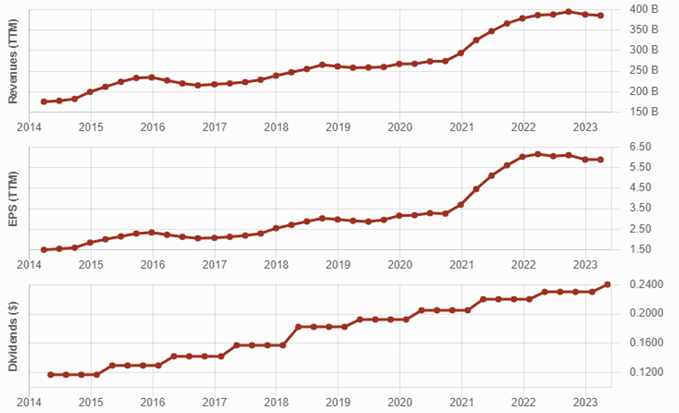

 Fundamentally though, a company pays a dividend when it is unable or unwilling to use that money create even more value for shareholders. In other words, the company would rather pay you $1 in dividend when it cannot find a good project in which to invest that same dollar.
 In other words, they are growth stocks that happen to pay a dividend. The dividend they pay is small because the companies are growing very fast, often at double-digit growth rates, and because they regularly use a sizeable portion of their income to fuel their growth.
 Unfortunately, the line is often thin between being a mature company generating growing cash flow that enables a minimum of dividend increases, and one that’s increasingly struggling, eventually cutting its dividend. IBM is an example of high yielder arriving at that crossroad.
 Earnings per share (EPS) is the amount of that net income that “belongs” to each share of common stock. It’s a valuable tool investors often use to determine the value of a stock.
 Depreciation applies to physical assets that have a predictable lifespan and wear out or become obsolete over time. Examples include machinery, vehicles, and equipment.
 Companies often need short term liquidity during their regular operations. Large quantities of working capital indicate the potential to expand quickly and make it easy for companies to buy equipment quickly. Without sufficient working capital (or negative amount), a company might have to borrow from other sources, potentially slowing down growth.
 Companies like pipelines, telcos, REITS, and utilities, invest massively in capital assets to operate and grow. While these capital expenditures (CAPEX) are money spent, they are also investments expected to be profitable. They affect the earnings of such companies much more seriously than, let’s say, restaurants or financial services companies that have much lower CAPEX.

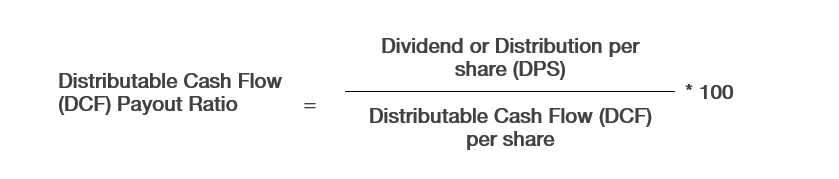
 Real Estate Income Trusts (REITs) use this ratio. Since REITs have to distribute at least 90% of their net earnings, the classic payout ratio is always at least 90%. This doesn’t reflect reality because REITs have a lot of non-cash charges like depreciation and amortization; they can also have substantial CAPEX as they maintain and expand their property portfolio.