A lot of investing mistakes can be summed up to one of two things: Overconfidence or Fear. And, despite the fact that these are two sides of the same spectrum, an individual can fall prey to both of them from time to time. In many ways, that’s what the stock market is all about.
Overconfidence
Many investors make the mistake of being too sure of themselves. Overconfidence and exuberance cause bubbles and lose fortunes. This is arguably a huge factor in the cause of this whole global financial crisis. A combination of greed and a sense of not-possibly-being-able-to-do-wrong is what caused once well-respected institutions to collapse. There’s simply no other explanation for the type of leverage that some institutions took on. How can any reasonable collection of individuals set up an investment strategy that completely collapses if it drops by a few percent?
Worse yet, our minds are hardwired for overconfidence. A gambler finds it easier to recall their big wins than their several losses, even if their losses dramatically outweigh their wins. The same can be true for the stock market, especially since for the way that many people approach it, it is gambling.
Most people consider their self to be above average. By definition, only half of people can be above average drivers, possess above average intelligence, or have above average morality, and yet far more than half consider their self to be these things. The same is true for investing: most consider themselves somehow better. I’d wager that such a feeling is hardwired into us for survival, but an investor must take control of it.
Fear
On the other side of the spectrum, fear can cause problems too. As soon as things turn sour, people have a habit of running for the hills and assuming that it’s never going to get any better. It’s not uncommon for a high-quality company to sometimes develop a hefty amount of bad press for one or more things, and then to find that its stock valuation has dropped dramatically. The media needs something to do everyday, and something to scare you with.
Bad press is often legitimate. Large companies do some pretty silly things sometimes, and there are certainly red flags and other warning signs to be aware of. But good companies are built to last through tough times. Bad news is a reasonable cause of a mild stock drop, but usually the market overreacts with fear. When a company is experiencing problems, people seem to expect that these problems will be permanent and that the company is no longer of any use.
Worse yet, fear is sometimes triggered by literally no reason at all. Sometimes stock sell-offs occur seemingly out of the blue, for reasons not related at all to company performance. Fearful investors freak out at their falling paper net worth and they sell sell sell!
The Path
The combination of overconfidence and fear is what causes stock market graphs to look ridiculous. A calm and patient investor, however, uses the absurdity of the market to his or her advantage, by consistently buying high-quality companies at good prices and ignoring short-term market noise.
There’s no silver bullet for developing a successful investor’s mindset, and it can take many mistakes and plenty of experience to learn, but there are some timeless guidelines:
-When you make an investment, write down your investment thesis and save it. When things become questionable, you’ll be glad you have a tangible declaration of why you purchased the stock in the first place and this will allow you to make a more measured decision on what to do.
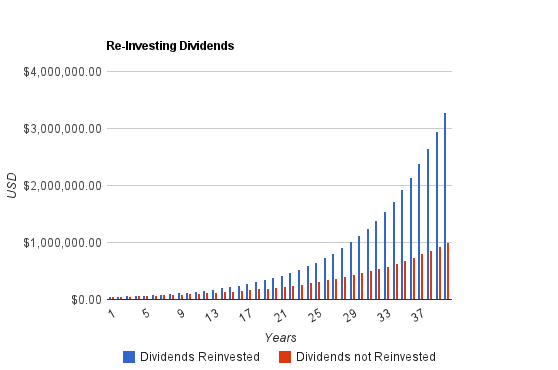
-Focus on passive income, and the psychological edge that dividends can provide. Dividends provide a huge sense of normalcy and reason in the stock market. They’re declared by the board of directors based on company performance rather than determined by the whims of the market. By focusing on building sustainable and growing dividend income streams, investors should find most of these psychological obstacles of fear and overconfidence removed from their way.
-Focus on company fundamentals. Ignore the stock market and focus on how the company is actually doing. Is the revenue increasing? And earnings and cash flow? Is the payout ratio reasonable, and is the dividend well-covered by cash flow? What are the debt levels like? Are the products and services provided by this company going to be in demand 3, 5, and 10 years from now? Are they growing their number of facilities/locations/volumes? If the company has some bad news, how bad is it? If the stock price got cut in half recently, is it because the company actually made a mistake big enough to cut its company value in half, or did it just spook speculators and institutions with a small misstep?
-Always keep the valuation in mind. You’re buying a business rather than just a stock. It doesn’t matter whether you’re a value investor or a growth investor; the valuation is important. This doesn’t mean to specifically buy cheap stocks or to avoid high P/E stocks, but it does mean to weigh the prospects of the company against its stock price, and determine what kind of company performance would be necessary to justify the current price of the stock. Looking back at the dot com bubble, there was simply no way to justify the stock prices of many companies. Impossible levels of growth would have been necessary.
-Utilize a margin of safety. Once you’ve compared prospective company performance to the current stock price, make sure you leave yourself a margin of safety. To put it simply, our estimations are going to be wrong sometimes, so keep that in mind and focus on buying companies when their shares are cheaper than what you think they are worth. This way, many of your mild mistakes will still be victories.
-Diversify your assets. Invest in several stocks to keep your risks related to any single stock relatively low. Keep some money out of equities so that you can take advantage of undervalued markets when the opportunity arises, either by means of automatic asset allocation or through individual stock-picking.